



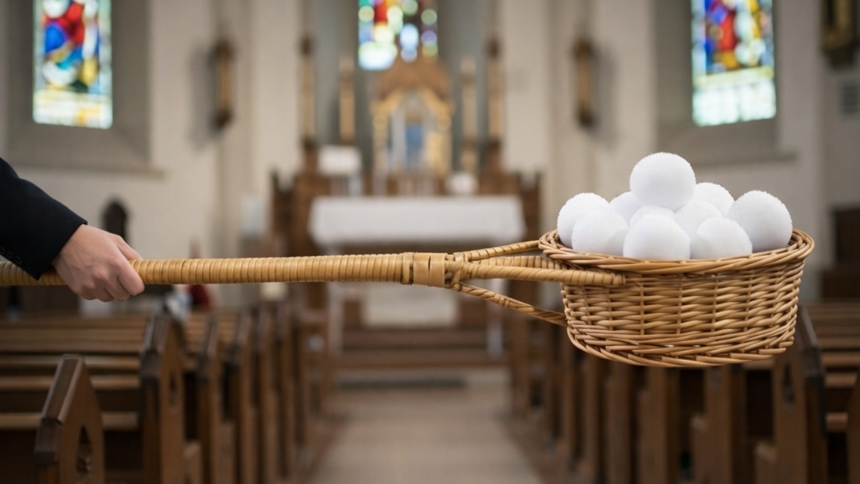
In recent weeks, much of the country has experienced severe winter weather—but here in North Carolina, including the Diocese of Raleigh, regions unaccustomed to prolonged snow and ice have felt the disruption in a big way. Icy roads, power outages, frozen pipes, and canceled school days, parish events, and even Masses became part of daily life.
"In a way it seems fitting, with Groundhog Day observed in some places this week, that we are as if in a repeat of last weekend,” said Monsignor David Brockman, pastor and rector at Holy Name of Jesus Cathedral. "I do not ever recall snow two weekends in a row in my 35 years serving in priestly ministry! It’s been a challenging reminder — twice — that our parish mission continues no matter what the weather."
Winter storms and the cost to parishes
For parishes, winter storms bring more than empty pews. Snow and ice often mean higher heating costs, emergency repairs, snow removal, and, in some cases, significant property damage from frozen or burst pipes. At Saint Peter Parish in Greenville, for example, a burst pipe in the school building resulted in severe water damage to six classrooms and the school office—an expensive and unexpected setback that arrived in the midst of already challenging conditions.
Many parishes operate on very tight margins even in good weather. A few missed weekends of collections, combined with unplanned maintenance or repair costs, can quickly strain already-limited budgets. This reality is not new, but it is often invisible. Pastors typically don’t like to talk about finances, and parishioners understandably may not think about church operations when worship moves online or Mass is canceled altogether. Yet the mission of the Church—to worship, to serve, and to care for those most in need—continues regardless of the forecast.
When the need grows, the mission continues
Winter weather also brings another challenge alongside reduced parish income: increased human need. Catholic Charities agencies and parish outreach ministries frequently see spikes in food insecurity, requests for heating assistance, warm clothing, and emergency shelter during periods of severe cold. Families living paycheck to paycheck can be one missed shift or one unexpectedly high utility bill away from crisis. For the elderly and other vulnerable neighbors, extreme cold can be dangerous, even life-threatening. In this sense, winter storms do not pause the Church’s mission—they intensify it.
Severe weather can also serve as an invitation to generosity beyond our parish walls. Catholic Charities and other relief organizations often respond quickly during winter emergencies, providing food, blankets, heating assistance, and temporary housing to those most affected. An additional donation during these moments can make a tangible difference for someone facing the cold with far fewer resources and options.
How you can help
As winter continues, parishioners may wish to pause and ask a simple but important question: How can I help sustain my parish and care for my neighbors during this season? The answer may take many forms—through prayer, volunteering when conditions improve, supporting parish outreach ministries, or assisting Catholic Charities.
One practical way parishioners can help—especially when winter keeps people home—is through online and recurring giving. Monthly electronic donations provide stability during unpredictable times, ensuring that parish ministries, staff salaries, and charitable outreach can continue even when weather prevents in‑person worship. For many parishioners, online giving has also become a form of intentional stewardship, allowing them to support the Church consistently rather than only when circumstances allow.
“You could go online and give a one time gift, but the predictability comes when it recurs monthly and the priest can rely on it,” said Dawn M. Stark MBA, CFRE, chief development officer for the Diocese of Raleigh. “With online giving, parishioners don’t have to feel they have to ‘make up’ for a missing weekly offertory, and parishes can more accurately plan their ministry work and respond to needs when offertory is not weather-dependent."
The weather will eventually change. Roads will reopen. Pipes will thaw. But the quiet needs created by winter often linger long after the storm has passed. In meeting those needs together, the Church offers a powerful witness—not only of resilience, but of charity rooted in faith and shared responsibility.