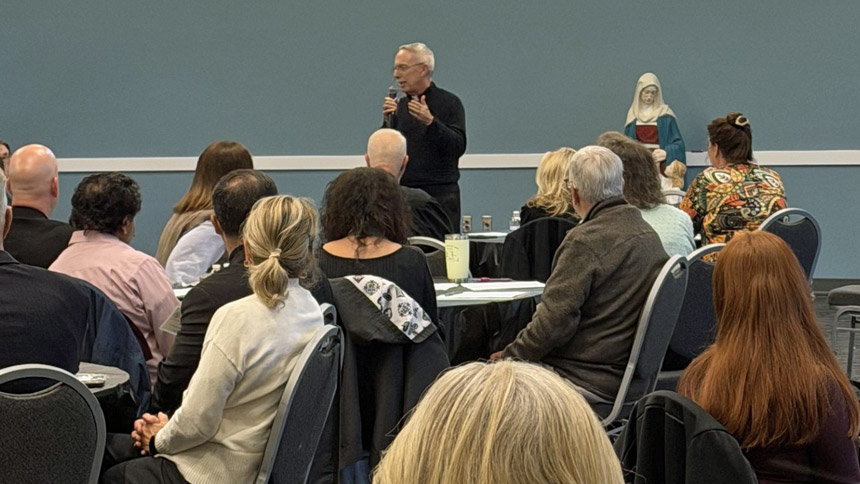



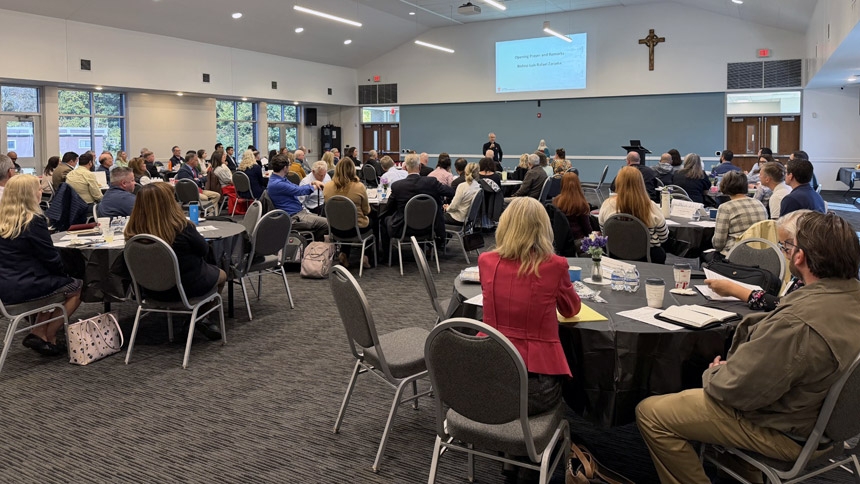
CLAYTON, N.C. — Pastors, diocesan leaders, school principals, directors and parish finance team members from across the Diocese of Raleigh came together Oct. 27 at St. Ann Church for the Diocesan School Finance Summit, a daylong program from the diocesan Office of Education on strengthening Catholic schools and the partnerships among schools, parishes and the diocese.
Bishop Luis Rafael Zarama opened the day with welcome remarks and prayer. Diocesan leaders then presented sessions on governance, planning and monitoring, cost management, development, and tuition and financial aid.
Shared responsibility for school ministry
The morning began with a review of how Catholic schools are governed and supported. Marcelo Eureste, superintendent, outlined diocesan governance and support structures, including salary audits, tuition setting, and marketing and enrollment services.
Father Michael Burbeck, vicar general, spoke about the pastor's role, explaining that the school is part of the pastor's teaching ministry and that governing a parish school includes oversight of its finances.
Eureste described how principals develop the annual budget and report regularly to the pastor and Parish Finance Council, while Curt Peters, chief financial officer, addressed the responsibilities of finance councils, bookkeepers and business managers.
Planning and monitoring school finances
Peter Ciulla, director of financial planning and analysis, encouraged schools to build budgets on realistic enrollment and tuition assumptions and to balance the budget before making commitments such as salary plans. He also urged regular cash forecasting and reserve planning, supported by a clear budget calendar shared among principals and finance councils.
Vi Dang, financial analyst, reviewed the key indicators that set financially healthy schools apart from those under strain. She noted that sustainability begins with enrollment-driven budgeting and disciplined personnel cost management, and she recommended that principals regularly review enrollment trends, personnel costs, cash flow forecasts and budget-to-actual performance.
Opportunity Scholarships and cash flow
Dang also discussed the growing role of the North Carolina Opportunity Scholarship in school funding. Because scholarship payments do not always arrive in step with monthly expenses such as payroll, even a school with a balanced annual budget can face temporary cash flow gaps. She emphasized cash flow forecasting and healthy operating reserves as safeguards.
Internal controls and fraud prevention
Christine Passaretti Norwood, manager of audit and parish accounting, reviewed internal controls and fraud prevention, including the separation of financial duties, dual control over uncounted funds, independent bank reconciliations and management review before payments are issued. Her message to participants: follow diocesan policies, trust but verify, ask questions and report concerns promptly.
Cost management, development and financial aid
Eureste discussed teacher and staff compensation, including the diocesan salary scale and benefits, and strategies for managing costs such as reviewing staffing hours and facility energy use. He also encouraged parishes to invest meaningfully in their school ministry, noting that parish support expands resources for families and helps schools to weather economic downturns.
Dawn Stark, chief development officer, outlined development and advancement resources available through the Office of Development and The Foundation, including annual funds, endowments, major gifts, capital campaigns, planned giving and iGiveCatholic.
Anna Bragg, who directs marketing and enrollment for diocesan schools, reviewed current tuition rates and the financial aid available to families, including BIMO/AAMEN grants, God's Work, Our Challenge grants, the Opportunity Scholarship and parish support, and spoke of financial aid as a preferential option for those facing an affordability gap.
Closing the day
Peters and Eureste closed the day with a summary of key takeaways, action items and next steps, followed by a closing prayer.
Gratitude to the host parish
Summit organizers extended special thanks to St. Ann Catholic Parish, to its pastor, Father Andrew Ogacho and to its parish secretary, Mary Worley, for their gracious hospitality.
Participants were invited to share feedback on the summit through an exit survey to help shape future events.