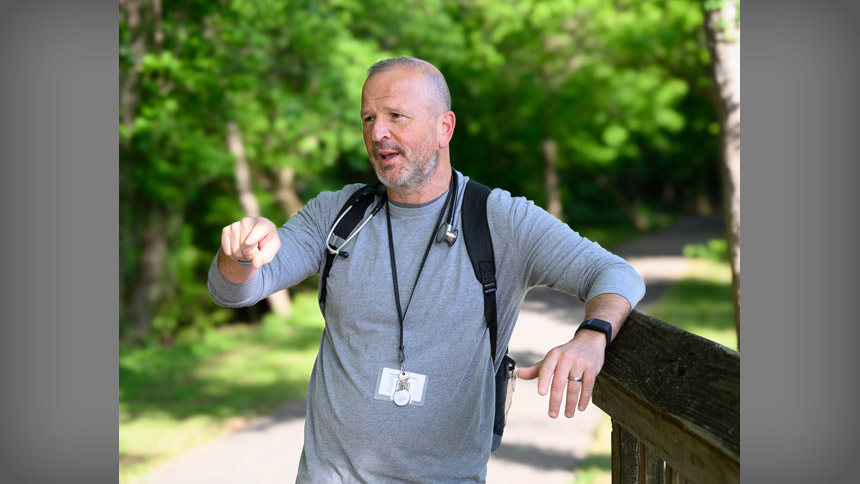



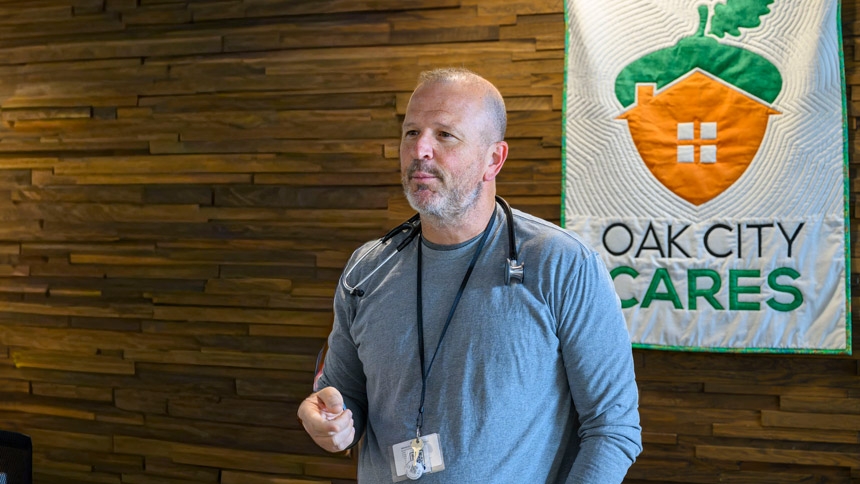
Above: Klausner said, “I have a front-row seat to some of the most powerful examples of resilience; it’s both fascinating and deeply inspiring.” (Photo by Greg Mintel)
It is human nature to gravitate toward what is comforting in Scripture — Bible verses that reassure us of God’s love and presence. Yet the Gospel is as demanding as it is consoling. It does not simply comfort; it calls us to conversion.
“I will give you rest” sits alongside “Love your enemies.” One offers consolation; the other calls for transformation. In the Parable of the Good Samaritan, Christ makes clear that love of neighbor is not abstract; it is personal, inconvenient and often costly.
Part of the answer lies in human nature. Scientists describe a phenomenon known as “reflexive dehumanization,” a mental shortcut that allows us to distance ourselves from others’ suffering and avoid the discomfort of empathy. While this instinct may be natural, the Gospel calls us beyond it and toward recognizing the dignity of every human person.
For Brian Klausner, a medical doctor, that call is not theoretical; it is lived out daily. And the term neighbors includes those experiencing homelessness.
“What Jesus models in the Good Samaritan isn’t just a nice story,” Klausner explained. “It’s a challenge. Jesus never apologized for that. Sometimes we pretend it [living out the Gospel] should be easy because we want it to be easy.”
Instead, Klausner believes the Christian life requires intentional resistance to our instincts. “We are called to do the hard things — to overcome selfish, social instincts so we can better love, support and bring God’s love into the world.”
Klausner has built his career around that conviction. As the founder of WakeMed’s Center for Community Health, Innovation and Equity, a clinic serving severely ill, uninsured patients without access to primary care, he has dedicated his work to those who often fall through the cracks of the healthcare system.
Raised in Los Angeles and trained at Georgetown University School of Medicine, Klausner began his medical career with the Boston Health Care for the Homeless Program, where he became medical director of its largest outpatient clinic.
A simple coin flip eventually brought him to Raleigh in 2011, an outcome the local community has benefited from ever since. Drawing on his early experiences, he continued to expand his focus on caring for individuals experiencing homelessness.
“I never planned on a career in homeless medicine,” he said. “I fell into it by accident and then was instantly hooked.”
Sharing his message in a book
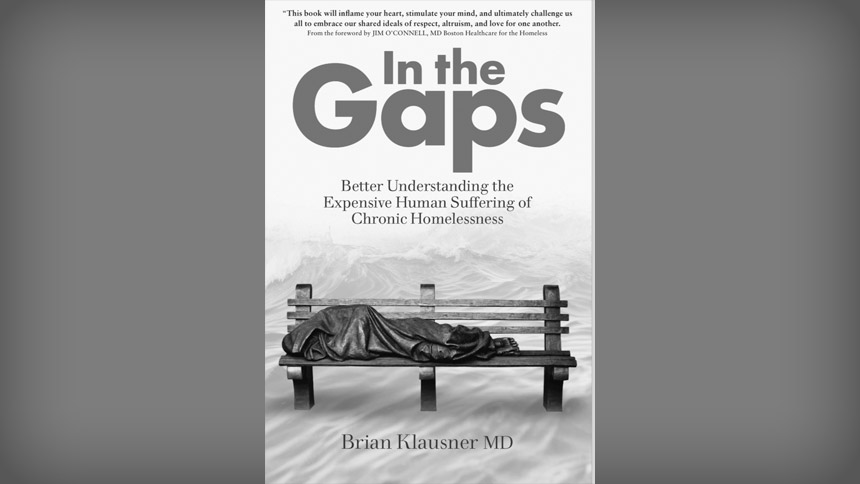
In his book, In the Gaps, Klausner chronicles years of practicing medicine among society’s most vulnerable, reflecting on the relationships that have shaped both his work and his faith. Among the many stories he shares, one stands out: a longtime patient nearing the end of his life, whom Klausner helped reconnect with both family and a priest.
In his final days, the patient offered a simple but powerful reflection: “Love is greater than hate. Good is stronger than evil. In the end, it’s all that matters.”
Reflecting on those words, Klausner emphasizes a call to look outward. “Try to make the world a better place,” he said. “When you’re exposed to darkness, try to demonstrate love to everyone you encounter.”
“It’s not only a religious goal,” he added. “Living in hate, selfishness and constant self-focus is not a healthy way to live. There is real value in engaging with the world and bringing love into it. Yet we are increasingly being polarized into stress, hate and division.”
Klausner also noted how language and cultural narratives can shape perception. When referring to the unhoused, words like “vagrancy,” often are used in policy discussions but the term stands in stark contrast to the individuals he knows personally.
“I see people drawing resilience out of nothing while the world discards them through labels,” he said. “Why do we do that? Because it saves us from the pain of empathy. Whether through social media or politics, the instinct toward division is increasingly being amplified.”
Time with his patients sustains Klausner in a field that can be emotionally and physically demanding. When asked about burnout, he points not to endurance, but to inspiration.
“There is nothing more beautiful than human resilience,” he said. “The more I understand neurobiology and the science of trauma, the more I see our patients battling for their health every single day. I have a front-row seat to some of the most powerful examples of resilience; it’s both fascinating and deeply inspiring.”
Chasing symptoms and integrating faith Klausner identifies what he calls a “cardinal sin” in medicine: chasing symptoms without addressing root causes. He notes that adverse childhood experiences are present in approximately 74% of the homeless population, compared to about 5% in the general population, a disparity that helps explain higher rates of addiction, suicide and chronic disease.
“Too often, we’re treating downstream symptoms of problems that began much earlier,” he said. “The question becomes: how do we address those root causes, both from an efficiency and a humanity perspective?”
While he does not claim to have all the answers, Klausner is certain that spiritual care must be part of the solution. “One of the most impactful interventions at our clinic hasbeen the presence of a spiritual care chaplain. When you address the spiritual needs of patients as part of their whole care, their medical outcomes improve — and that is well supported by evidence.”
Oak City Cares
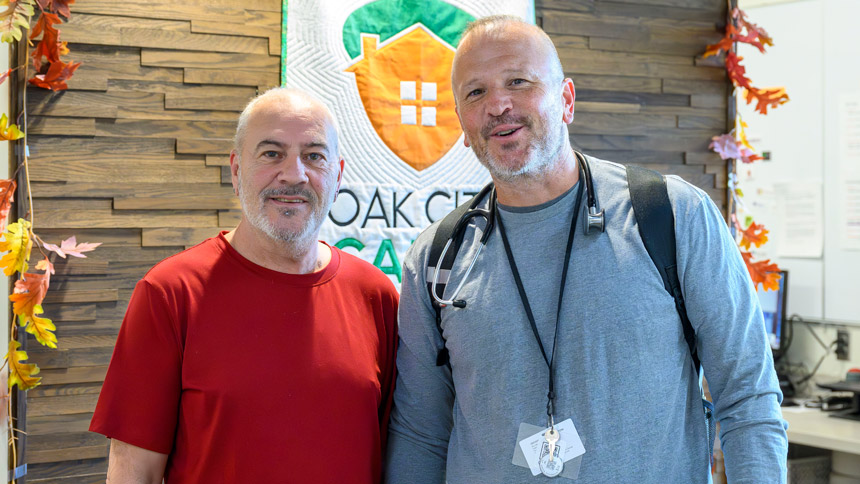
Klausner’s work extends beyond the clinic through partnerships with local organizations, including Oak City Cares, which provides coordinated services for individuals experiencing homelessness. In collaboration with the City of Raleigh, Catholic Charities of the Diocese of Raleigh played a leading role in launching and operating the initial outreach program.
Recognizing that even the strongest network of nonprofits can feel fragmented and overwhelming, Oak City Cares brings service providers together under one roof, simplifying access to care and support.
Klausner worked closely with founder Rick Miller-Haraway to build trust within the medical community and secure support for the center.
He also served as a key board member for many years. Miller-Haraway said Klausner brings expertise and compassion to Oak City Cares.
“He’s brilliant,” Miller-Haraway said. “His intellect is off the charts, and his understanding of the complexities of healthcare for the homeless is extraordinary. But most importantly, he has the heart. He listens to people’s stories. He doesn’t hesitate to go wherever he’s needed — even into the woods in the middle of the night if someone needs care.”
Parish work
That same commitment is evident in his faith life. Father Daniel Oschwald, pastor of Klausner’s home parish, Mother Teresa in Cary, sees Klausner’s work as a powerful witness to the Gospel in action.
“Brian is caring for the poorest of the poor and offering a profound example of Christian discipleship,” Father Oschwald said. “He speaks with passion and conviction, but more importantly, he lives it. He’s not just talking about the Gospel. He’s doing it.”
Father also points to Klausner’s broader mission to address the challenges of the U.S. healthcare system. “He has a clear understanding of the system’s challenges and offers practical solutions,” Father Oschwald said. “Even when meaningful change is difficult, he remains undeterred in his pursuit of a more compassionate and just approach.”
Photos
Photography by Greg Mintel